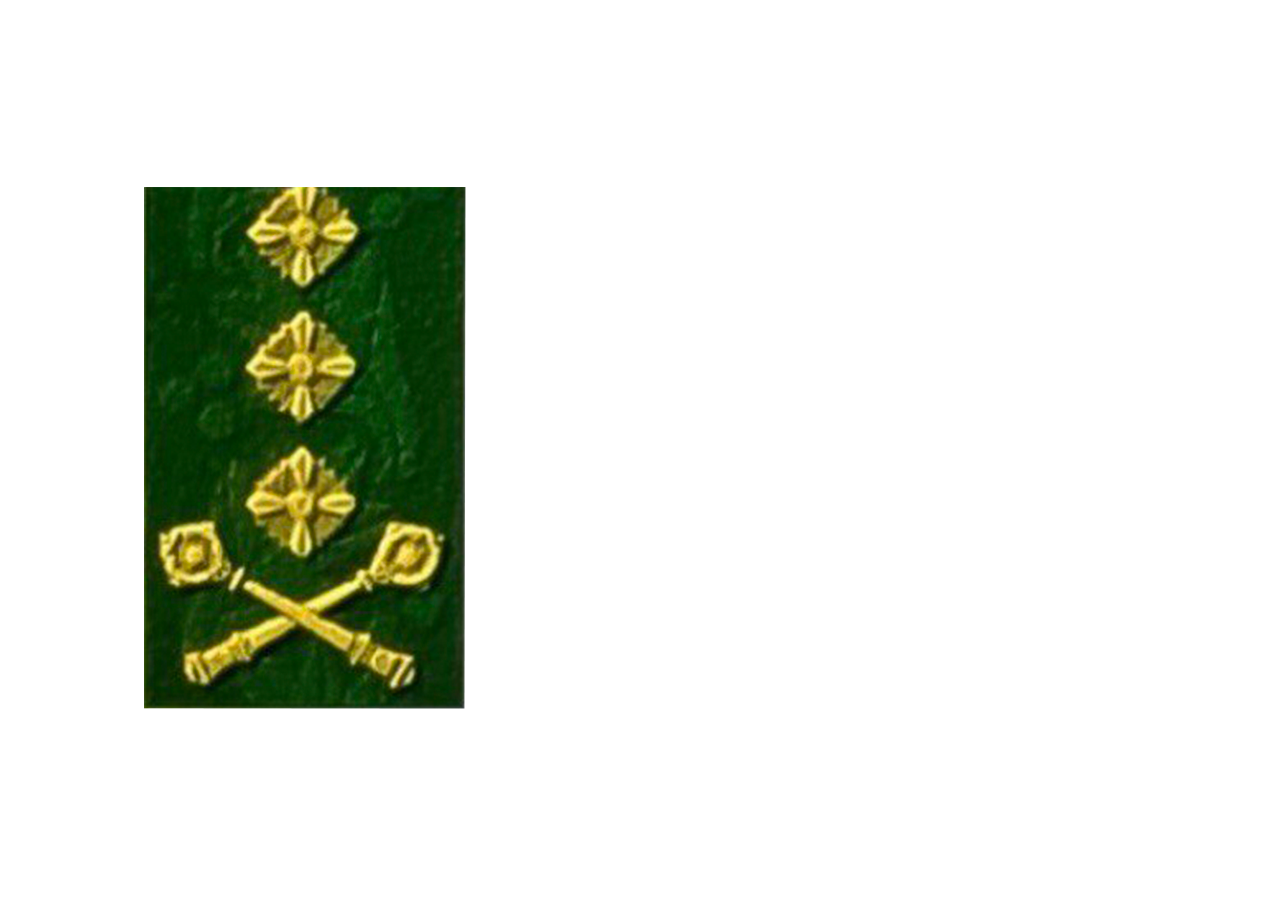
General Kozhemiakin's military experience and direct involvement in the process of defending and liberating Kyiv from Russian invasion, in particular in the spring of 2022, and now that military volunteer formations have been formed and integrated into the Armed Forces of Ukraine and where he is one of the commanders of the Mriya Foundation, gives a clear understanding that collective international security is a clear means of guaranteeing peace and a clear goal for our country.
Therefore, the aspiration of Ukrainian society to join the North Atlantic Security Alliance, enshrined in the Constitution of Ukraine, is the only right path that we must take as soon as possible. What is needed and what have we already done? A lot! The consolidation of our society in this regard, the stunning success of the army, the growing prestige of Ukraine in the world, reforms in many sectors are the main principles that allowed our country to receive the status of a future member of the Alliance without MAP at the NATO Summit in Vilnius on 11 July 2023. However, full membership is still ahead, there are significant issues that do not allow us to clearly name the date of accession. First of all, it is the war, and secondly, it is the unfinished path of reforms in the country.
General Kozhemiakin, a member of the Ukrainian parliament and chairman of the Verkhovna Rada Committee, is also a member of the NATO-Ukraine Council. This body coordinates relations between the parties, established at the same Vilnius Summit. The newly created Council continued the work of the NATO-Ukraine Commission, which was launched back in 1997. The main goal of the joint organisation is clear: to create the most effective conditions for Ukraine's early accession to NATO.
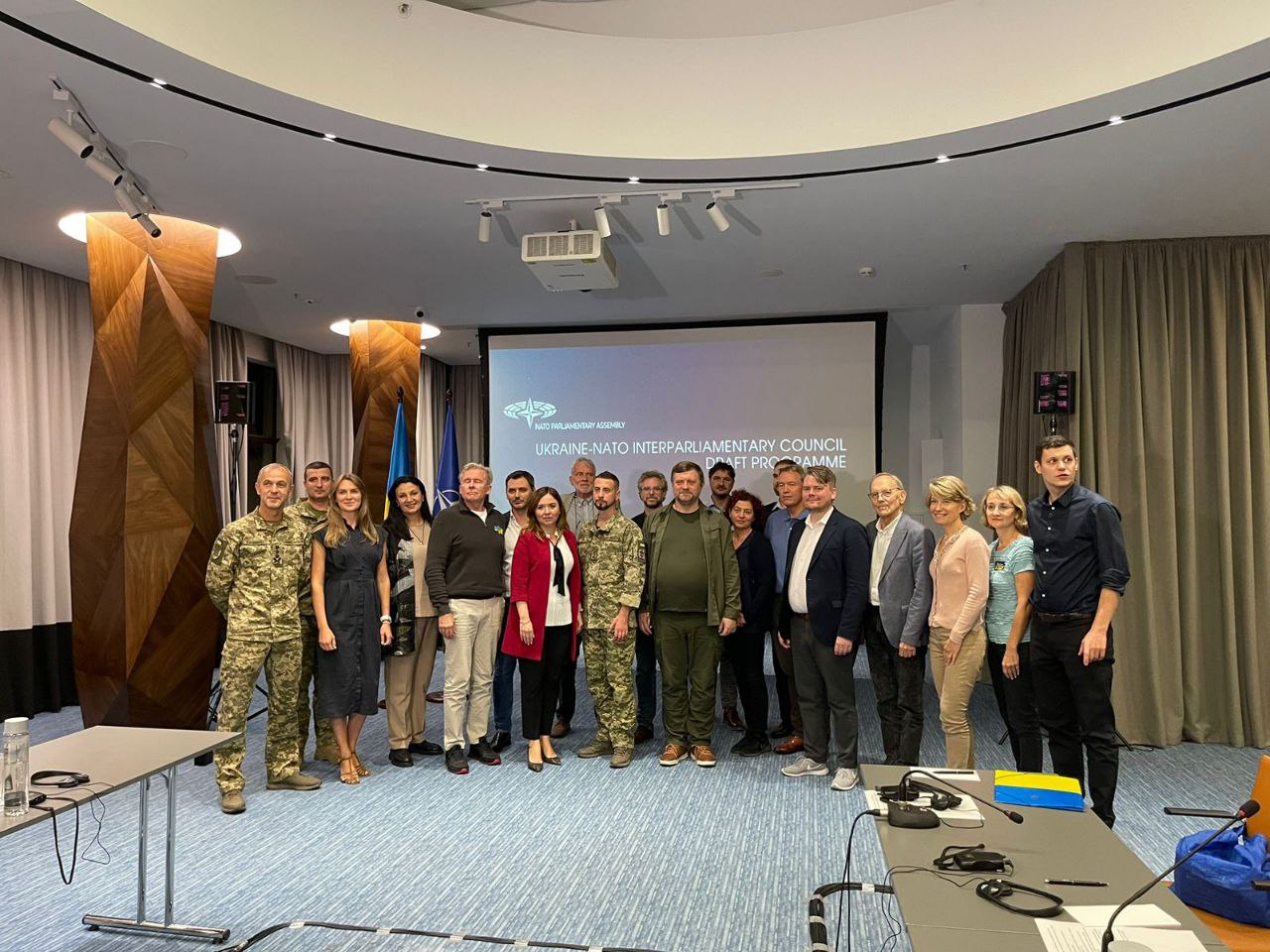
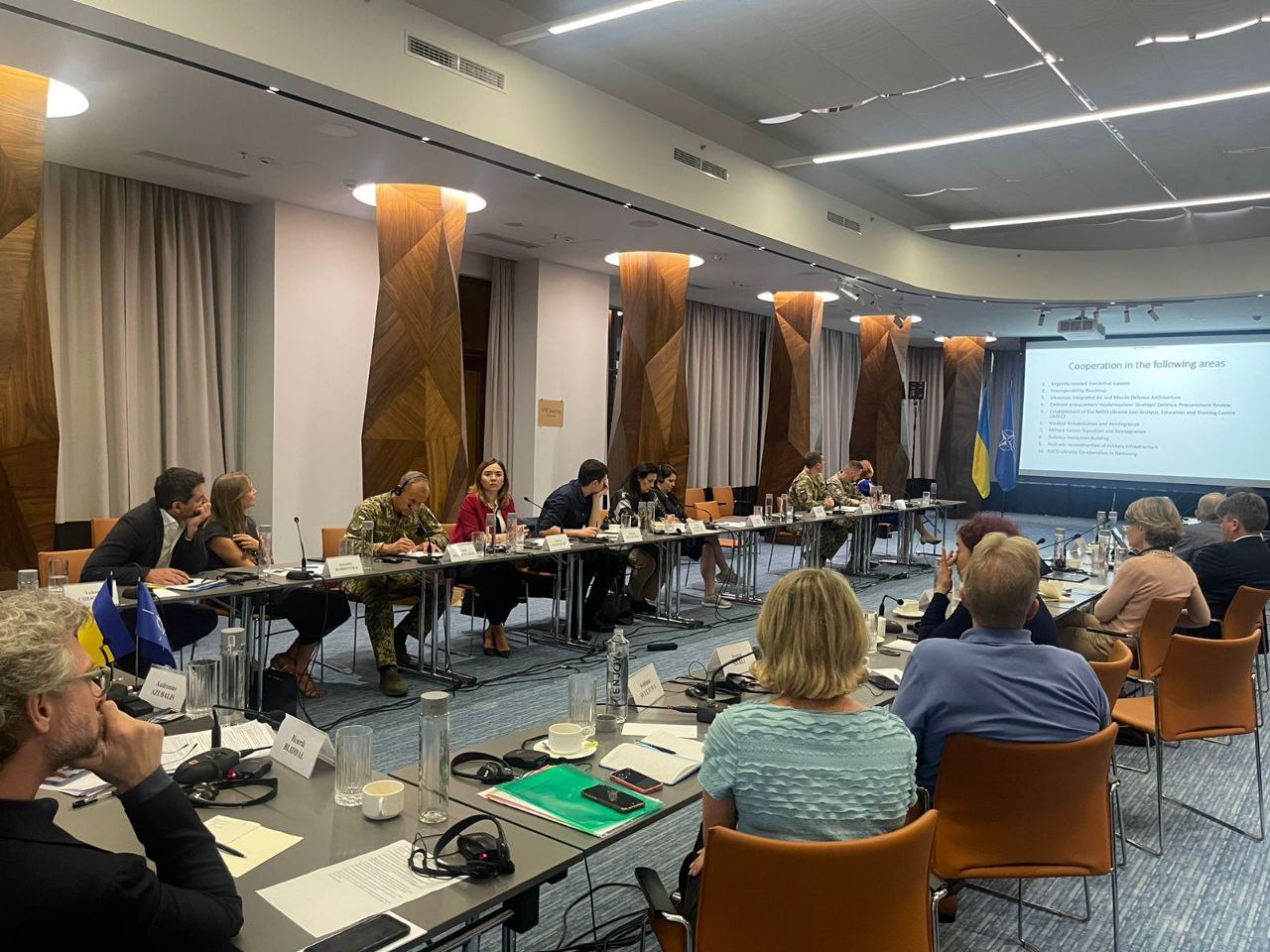
On 23-25 September 2023, the regular NATO-Ukraine Council met in Lviv. In the presence of delegates from all Allied parliaments, the results of the current period of cooperation were summed up, priorities for further work were identified, and the conditions for establishing a joint training centre for the Armed Forces of Ukraine and NATO troops on the basis of appropriate infrastructure in Poland were discussed. By the end of the year, it is planned to approve the organisational documents, present them at the NATO Summit, and launch the Centre in 2024.
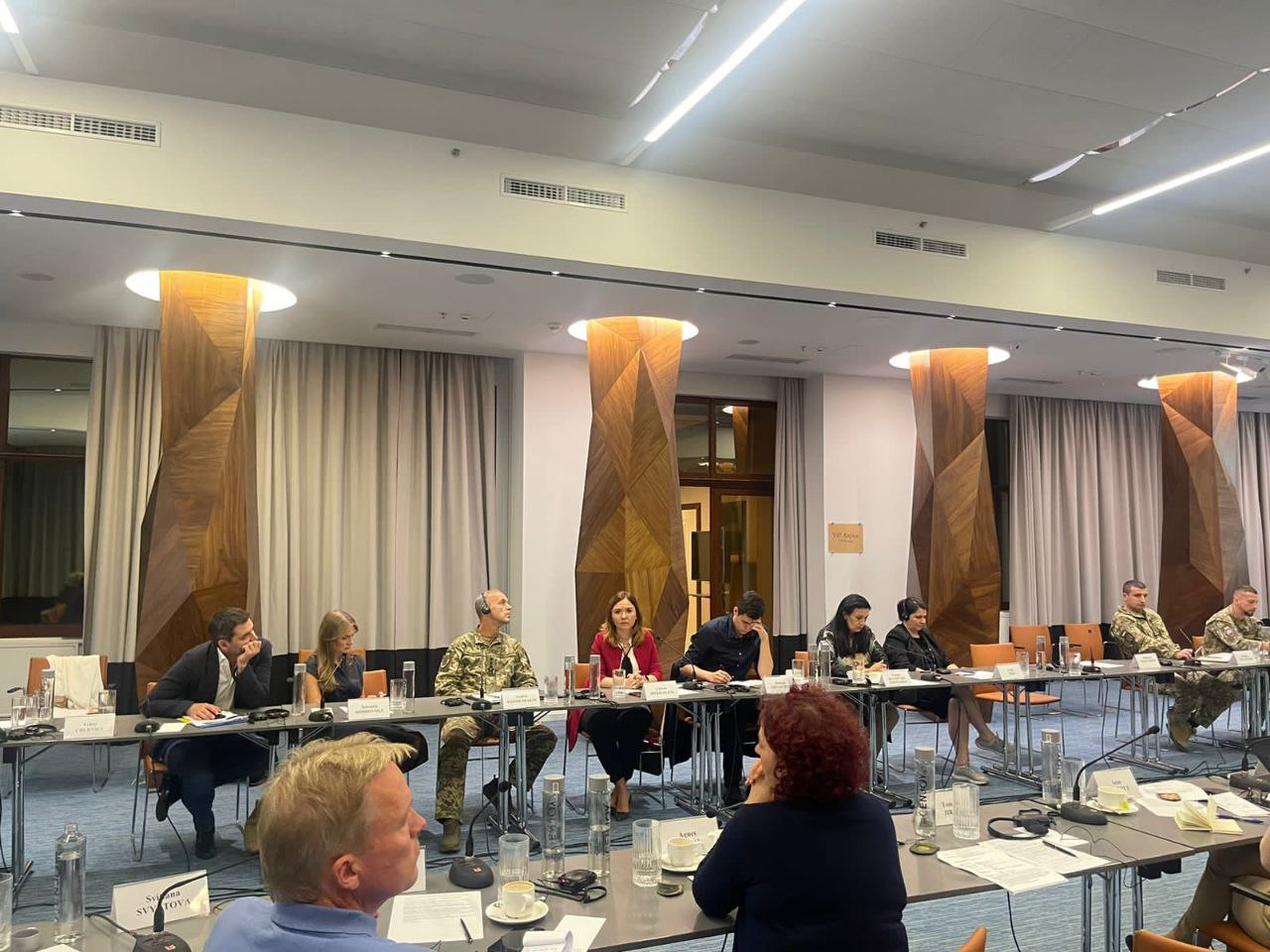
However, the question of fundamental importance is how and when our country's alliance with the western security bloc is possible. However, it is clear that the main obstacle to this is the war unleashed by Russia in Ukraine. MP Kozhemiakin asked a direct question: "Is there any possibility of getting collective defence for Ukraine as soon as possible and what can our Western partners offer in this regard?" No direct answer was given, as it has not yet been formed by the members of the Defence Alliance. However, the much-discussed Israeli version of security guarantees does not quite suit Ukraine, and the transitional stage that was granted to Sweden and Finland for the period from invitation to membership cannot be extended to Ukraine at this time. Therefore, there is still a step-by-step path for Ukraine's progress towards the Alliance. And, at the same time, we need to find new, innovative or even revolutionary approaches to forming resistance forces against the aggressor Russia. To this end, the Ukrainian parliamentary corps is systematically working with its NATO parliamentary colleagues. However, military assistance, including weapons, cybersecurity, logistics, energy protection for the population and the humanitarian component, is still a priority.
"What we need now is to increase the assistance we critically depend on. This may be one way. Another is to initiate various additional documents that the NATO Parliamentary Assembly could use to address the executive branch and set the tone for Ukraine's future in the Alliance, in particular, the need to invite Ukraine to join the North Atlantic Treaty Organisation. This is possible if we work systematically and efficiently," emphasised Ivanna Klympush-Tsintsadze, a member of the NATO Interparliamentary Council.
For his part, Andriy Kozhemiakin, Member of Parliament of Ukraine, Chairman of the Committee on Youth and Sports, said that joint resolutions are being prepared on all important issues to accelerate this path to influence the parliaments of all NATO member states.
"In Vilnius, we continued to support Ukraine and introduced new practical assistance packages. But I hope for much more. These are not only practical assistance packages, but also some political decisions," said Audronius Ažubalis, Co-Chair of the NATO-Ukraine Interparliamentary Council.
He also emphasised why it is necessary to bring Ukraine closer to membership and recalled that in Vilnius, the leaders of the Group of Seven and President of Ukraine Volodymyr Zelenskyy signed a joint declaration that should ensure bilateral commitments and security arrangements.
"We want to create an iron fist of solidarity with Ukraine, a nation that is fighting for the survival of Europe in particular. We must be clear that if we do not fully support Ukraine until it wins, Putin is waiting for us. If we freeze the war now, Putin will declare victory," said Audronius Ažubalis.
Following the meeting, the participants adopted a statement calling on Allied leaders to take bold strategic decisions on Ukraine's membership in NATO at the Washington Summit in 2024 and to support President Zelenskyy's Peace Formula. They also stressed that the Russian Federation must be held accountable for the crime of aggression, and that sanctions against Russia must be maintained and expanded to undermine its ability to continue its military actions.
The delegation also had an interesting meeting with scholars and students of the Ivan Franko National University of Lviv.
Young people are very important for Ukraine, what they live, breathe, and profess, because in 5-10 years they will be holding leadership positions in the country, in diplomatic missions, these young men and women will be writing laws, ensuring the security of the state - that is why it is very important to hear their views on Ukraine's future in NATO.
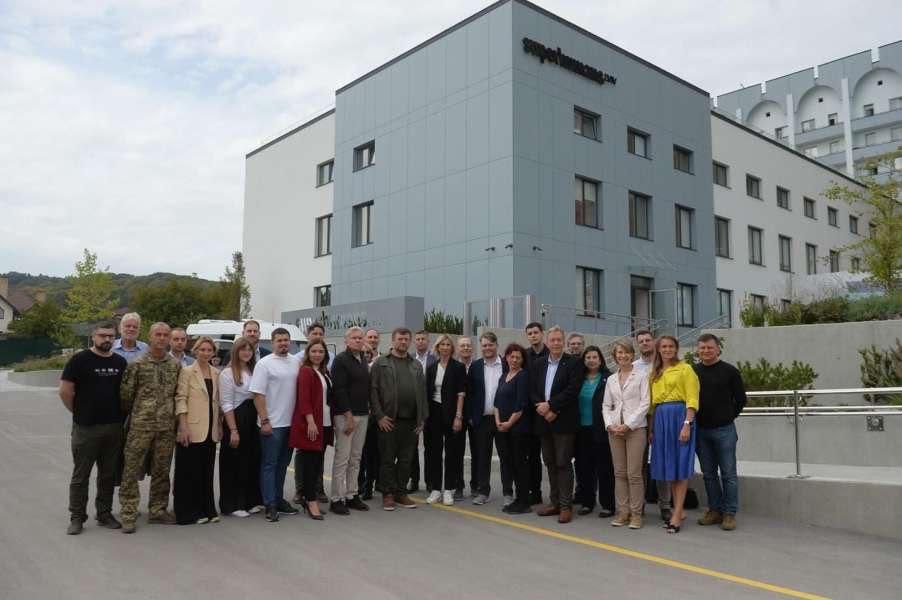
The parliamentary delegates also visited the Superhumans National Rehabilitation Centre, a modern Ukrainian centre for prosthetics, reconstructive surgery, rehabilitation and psychological support for adults and children affected by the war.
The topic of full rehabilitation is not only about medical rehabilitation, but also about physiological and psychological rehabilitation. Using the example of this centre, we considered how to integrate work with people who have lost limbs into the general healthcare system: "This should be a part of the state policy - we are working on a veteran policy," said Oleksandr Kornienko, First Deputy Chairman of the Verkhovna Rada.
For his part, Roman Hryshchuk, Member of the Ukrainian Parliament and member of the Committee on Education, Science and Innovation, stressed the need to increase the number of such centres and trained specialists. He also thanked international partners and donors for their support and cooperation.
Solomiya Bobrovska, member of the Committee on National Security, Defence and Intelligence, noted that every region of Ukraine should have such centres to be able to provide qualified medical rehabilitation care to Ukrainian soldiers. She expressed her belief that it is necessary to expand the system of such centres, because, unfortunately, today the number of amputees in Ukraine is higher than it was during the Second World War because of Russia's war against Ukraine.
International assistance and government efforts are extremely important, but unfortunately not enough. The involvement of society, the business community, and any charity in the recovery and health of people affected by the war, especially the military, is a direct and immediate contribution of everyone to our common victory over the enemy. This is a concrete case of making joint efforts to build a regional rehabilitation centre for Ukraine's soldiers. In fact, this is one of the activities and goals of our Foundation.
